
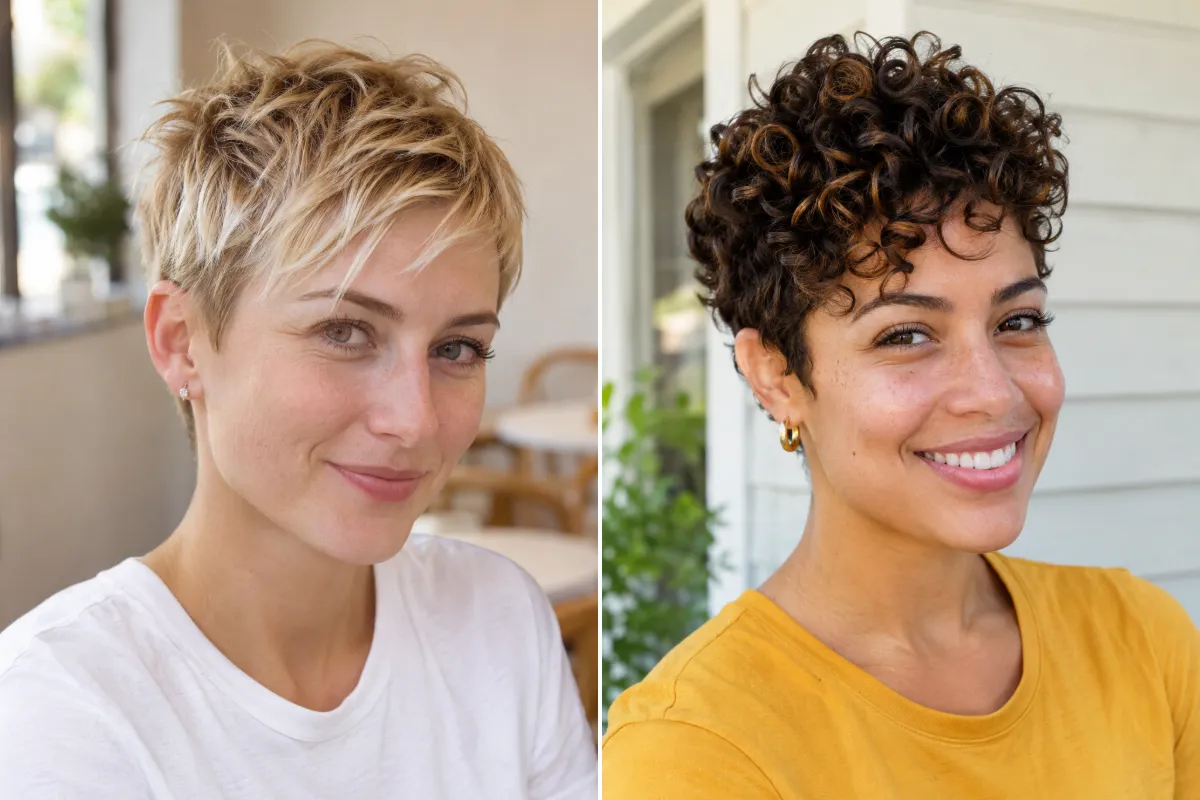
Going short is scary for one simple reason. You can’t undo it by Friday.
Most of us have a story about a cut that looked great in the photo and wrong in the mirror. Usually the cut wasn’t the real problem. The photo showed hair with a different texture, a different thickness, or a stylist who spent forty minutes with a round brush before anyone took the picture.
That’s why this list of short hairstyles for women is set up a little differently. Each look comes with who it tends to suit, how much upkeep it really takes, and the words to use at the salon so you and your stylist picture the same thing. You’ll find sleek bobs, soft pixies, curly shags, and close crops, with ideas for straight, wavy, curly, and coily hair.
Save the ones that make you pause. Bring two or three to your appointment. A good stylist would much rather see your photos than guess.
1. Blunt Chin-Length Bob With a Sleek Finish

The whole look comes down to one clean line at the chin.
A blunt bob is cut to a single length with little or no layering, so the ends look thick and solid. It tends to suit thick, straight hair best, since that weight helps the line sit flat instead of flipping out. Fine hair can wear it too, but it may need more smoothing each morning.
Ask your stylist for: a one-length bob that hits at the chin, cut blunt, with no internal layers.
Daily styling is a blow-dry with a paddle brush, plus a quick flat iron pass on any ends that kink. Spray heat protectant first. The line usually starts to look fuzzy after six to eight weeks, so book trims around that.
2. Short Wavy Shag With Curtain Bangs

If your waves always look better on day two, this cut leans into that.
A short shag stacks lots of layers, shorter at the crown and choppy at the ends, so waves have room to bend instead of getting pulled flat by weight. Curtain bangs part in the middle and sweep toward your cheekbones, blending right into those layers.
It suits natural waves and hair with some body. Very fine, straight hair can wear it, but expect to use texturizing spray most days to keep the shape.
What to say at the chair:
- A short layered shag that ends at the chin
- Curtain bangs that hit around the cheekbone
- Layers cut on dry hair, if your stylist does that
Styling is mostly air-drying with a little mousse or wave cream scrunched in.
💡 Quick Tip
Curtain bangs grow into your eyes well before the rest of the cut needs work. Many salons do quick bang touch-ups between full appointments, so ask about it. If you trim at home, cut them dry, point the scissors up into the ends, and take off less than you think.
3. Textured Pixie With Choppy Layers

Fine hair has a habit of lying flat no matter what you put in it.
A textured pixie works with that instead of fighting it. Your stylist cuts short, uneven layers across the top so the pieces stand apart and catch light. That separation reads as more volume than long fine hair usually shows.
It tends to suit fine to medium straight hair, and women who like a little edge without a long routine. Pixies lose their shape fast, though. Plan on a trim every four to six weeks.
Ask for: a short pixie with point-cut or razor-cut layers on top and a tapered neckline.
A pea-size dab of paste, warmed between your fingers and pinched through the ends, does most of the work.
4. Curly Bob With Rounded Layers

Short curly hair does not have to end up in a triangle.
That puffy, wide-at-the-bottom shape happens when curls get cut to one length. Rounded layers fix it by taking weight out of the right spots, so curls stack into a soft, even shape around your face.
It suits 3A to 3C curls, and anyone tired of waiting half a day for long hair to dry. Upkeep is moderate, with a reshape every eight to twelve weeks or so.
Ask for: a curly bob at chin length, cut curl by curl on dry hair, with rounded layers to remove bulk at the sides.
One honest warning. Curls shrink, so ask your stylist to leave it a little longer than your goal.
Rake leave-in and gel through soaking wet hair, then scrunch upward toward the roots.
Mist on heat protectant. Diffuse on low heat and low speed, cupping sections in the bowl and holding still instead of moving it around.
Once it’s fully dry, scrunch out the stiff gel cast with a drop of oil on your palms.
5. Tapered TWA for Natural Coily Hair

The rule with this cut is simple. Moisture first, shape second.
TWA stands for teeny weeny afro. The tapered version keeps more length on top and cuts the sides and nape close, so your coils get height and a clean outline. Lots of women land here after a big chop. Others choose it on purpose to shrink wash day down to almost nothing.
It works well for 4A to 4C hair. Daily upkeep is low, but the taper needs a cleanup every three to four weeks to stay crisp.
Ask for: a tapered cut with fuller length on top, a close taper at the sides and nape, and a shaped edge around the ears.
On most mornings, a spritz of water, a leave-in, and a curl cream is enough.
Put products on damp hair so coils clump together and stay defined.
Sleep in a satin bonnet or on a satin pillowcase so the top keeps its shape.
Combing through coils when they’re dry. That’s when snapping happens.
Piling on heavy gel every day, which can leave flakes and buildup on short hair.
6. French Bob With Bangs

Some cuts look best when they look like you didn’t try very hard, and this is one of them.
A French bob sits higher than a classic bob, somewhere between the cheekbone and the jaw. The ends are soft and a little uneven, and the bangs brush your brows. It’s supposed to look slightly undone.
It suits straight hair and loose waves. Fine hair does well here too, since the short length keeps the ends from looking thin.
Tell your stylist:
- Jaw-length bob with softened ends, not blunt
- Brow-grazing bangs, cut a little choppy
Rough-dry with your fingers, then smooth the bangs with a quick blow-dry or flat iron pass. Heat protectant goes on first. Expect a bang trim every three to four weeks.
| French Bob | Classic Bob |
|---|---|
| Length: cheekbone to jaw | Length: right at the chin |
| Ends: soft and a bit uneven | Ends: clean and even |
| Bangs: almost always included | Bangs: optional |
| Styling: rough-dried, a little messy | Styling: smoother and more polished |
7. Soft Silver Pixie With a Side Sweep

Gray hair isn’t harder to style. It just behaves a little differently.
Silver strands often feel coarser and wirier than the hair they replaced, and they can look dull or yellow under indoor light. A soft pixie handles that well. The sides and back stay tapered and neat, while a longer fringe sweeps across the forehead and keeps the look gentle instead of severe.
It tends to suit women in their 60s and up with fine to medium hair. Those longer top pieces also help cover a crown that’s gotten thinner.
What to ask for:
- Tapered sides and nape
- Extra length left in the fringe so it can sweep to one side
Plan on a trim every five to six weeks. If yellow tones creep in, a purple shampoo once a week helps.
Length on top, softness at the edges. A silver pixie looks warm when the fringe is long enough to sweep, and harsh when everything is cut to the same short length.
8. Curly Pixie Cut With Defined Ringlets

Show up to this appointment with your curls dry and styled the way you usually wear them.
That lets your stylist see where each curl actually lands. A curly pixie keeps the sides and nape short and lets ringlets stack up on top, so you get shape without bulk. It’s the shortest curly option on this list, and it’s a good fit for 3B and 3C curls.
Ask for a curly pixie cut dry, curl by curl, with more length at the crown and fringe and less around the ears.
Upkeep is moderate. Most mornings, a spray of water and a little cream bring the curls back. Air-dry, or diffuse on low with heat protectant. Book a reshape every six to eight weeks.
What to keep on your bathroom shelf
9. Stacked Bob With a Graduated Back
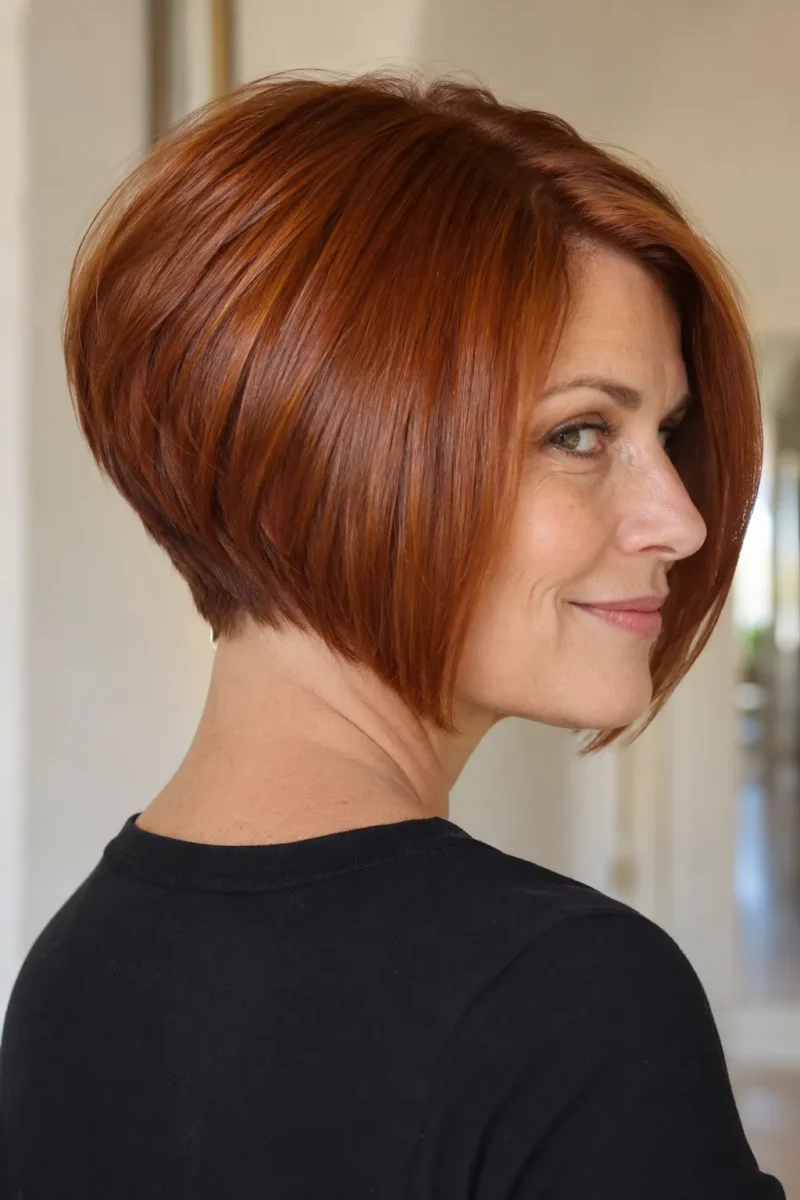
Thick hair can make a bob look heavy and boxy from behind.
A stacked bob fixes that with short, tight layers at the nape that build up into longer pieces toward the front. From the side, you see a rounded curve at the back of the head and a gentle angle down toward the chin.
It suits medium to thick straight or wavy hair. On very fine hair, the stacking can disappear, so ask your stylist if your hair has enough density.
Say this at the salon:
- Graduated layers at the back, short at the nape
- Front pieces angled down to the chin
Styling takes a round brush blow-dry, lifting at the crown. Use heat protectant every time. The back loses its shape quickly, so trims every five to six weeks keep it sharp.
A one-length bob on thick hair. The bottom puffs out, the crown lies flat, and the back looks like a solid block.
Short stacked layers at the nape, a rounded lift at the crown, and front pieces that angle neatly toward the chin.
10. Bixie Cut With Piecey Texture
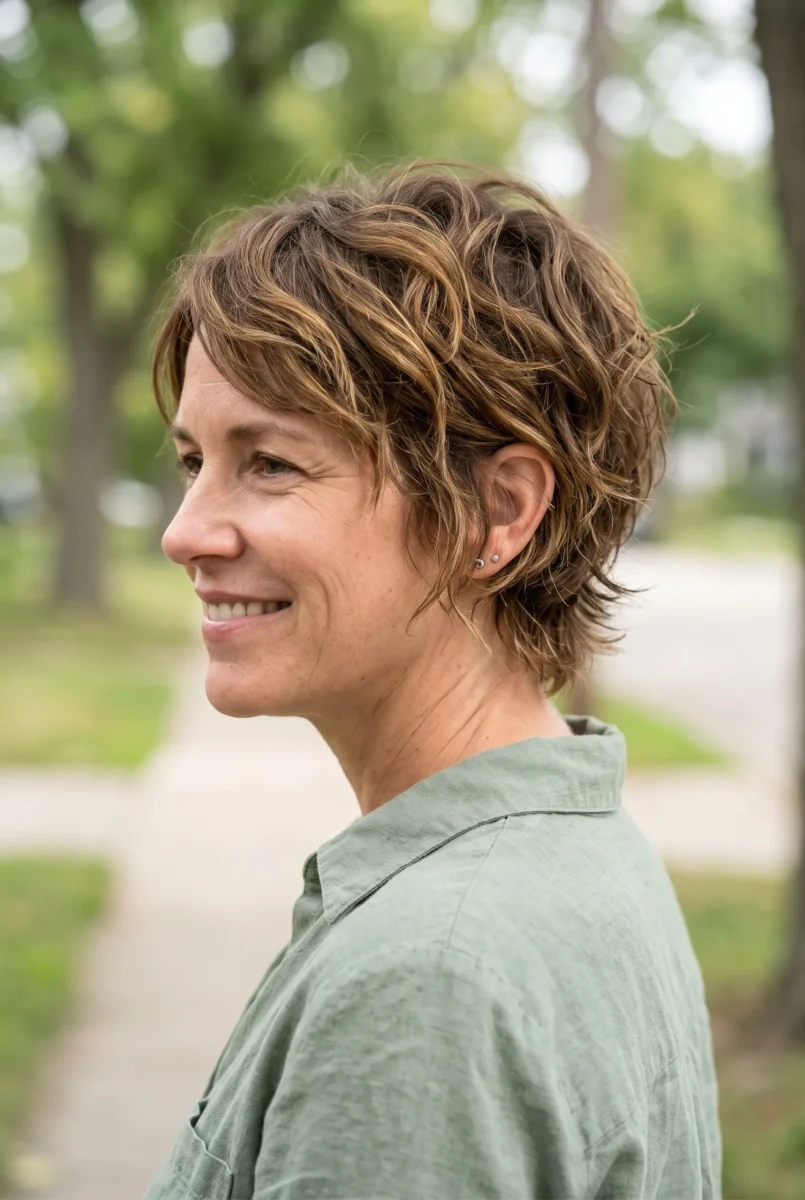
The most common mistake with this cut is asking for “a longer pixie” and hoping your stylist reads your mind.
Say “bixie” and bring photos. It’s a mix of a bob and a pixie: longer than a pixie around the ears and nape, shorter than a bob, with shaggy layers throughout. It suits wavy hair especially well, and it’s a popular pick for women in their 40s and 50s who want short hair without a full pixie commitment.
The ask:
- Length that covers the tops of the ears
- A soft nape, not tapered tight
- Choppy layers through the top
Styling is texture spray scrunched into damp hair, then air-dry. If you blow-dry, use heat protectant first. Trims land around every six weeks.
⚠️ Watch Out
A bixie grows out into a shaggy bob pretty smoothly, but a few months in, the back can get long while the sides stay short. When that happens, ask for a nape cleanup only and let the top keep growing.
11. Short Natural Coily Bob

Rounded at the sides and full all over, this bob frames your face with soft, springy volume.
Your stylist shapes it on stretched or picked-out hair so the outline comes out even. When it’s stretched, the ends land near the chin. Worn in its natural state, it sits shorter because of shrinkage, and that’s part of the charm.
It suits 4A and 4B hair, and 4C hair can wear it with a twist-out to hold the shape.
What to ask for:
- A rounded bob shape, cut on stretched hair
- Chin length when stretched
- Light shaping at the sides so it doesn’t widen into a triangle
A shaping trim every eight to twelve weeks keeps the outline neat. If you stretch it with a blow dryer, use heat protectant and low heat.
12. Undercut Pixie With a Longer Top
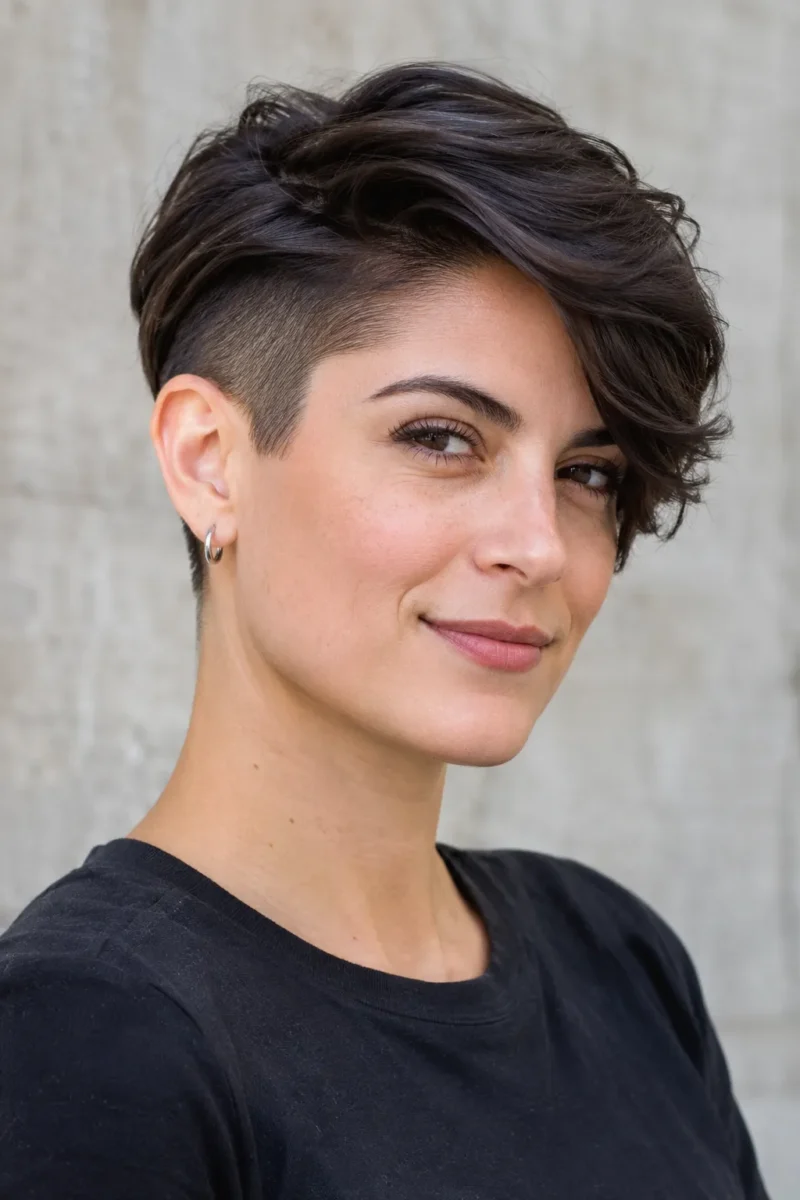
Thick hair feels a lot lighter with this cut.
An undercut means the hair underneath, on one side, both sides, or just at the nape, gets clipped very short. The top stays long enough to sweep across your forehead. Let it fall and the undercut mostly hides. Tuck it behind your ear and it shows.
It suits thick straight or wavy hair, especially if you’ve always had more bulk than you know what to do with.
Upkeep is split. The clipped part needs a cleanup every three to four weeks, while the top can go six to eight. To style, blow-dry the top with heat protectant, then work a little paste through the ends.
Pick your spot: one side, both sides, or only the nape. The nape is the easiest to hide at work.
Choose a clipper guard length. Start longer on your first visit. You can always go shorter next time.
Say how long the top should be, such as long enough to reach your brow when swept to the side.
13. Asymmetrical Bob With One Longer Side

Keep the gap between the two sides small enough to look like a choice, not a mistake.
In this bob, one side is longer than the other. Usually the long side ends at the chin and the short side lands near the jaw or earlobe. A deep part on the long side makes the shape read clearly.
It suits straight hair best, fine or thick. Wavy hair can wear it, but you’ll smooth it most days so the angle stays crisp.
Before your stylist starts, settle these:
- Which side is long. It’s usually the side you part on.
- How big the difference should be
- Blunt or softened ends
Honestly, this one takes work. Daily flat ironing with heat protectant is normal, and uneven grow-out shows fast, so plan on trims about every six weeks.
14. Short Curly Shag With Face-Framing Layers

Curly hair often grows wider before it grows longer, and the shag is one of the few cuts that plans for that.
This version uses lots of layers through the crown, so curls get lift right at the top instead of collapsing. Shorter pieces around the cheeks frame your face, and curly bangs are an easy add if you like them.
It suits 3A to 3C curls, especially if your curls tend to sit flat on top and puff out at the bottom.
Ask for: a short curly shag cut dry, with heavy layering at the crown and face-framing pieces at cheek level.
Air-dry or diffuse on low with heat protectant. A few clips at the roots while it dries add extra lift. Reshape every eight to ten weeks.
| Curly Shag | Curly Bob |
|---|---|
| Volume: mostly at the top and crown | Volume: spread evenly around the sides |
| Layers: many, choppy | Layers: fewer, rounded |
| Face framing: built in | Face framing: soft, optional |
| Overall feel: undone and playful | Overall feel: tidy and balanced |
15. Pixie Mullet With Messy Texture

Forget the stiff mullet from old yearbook photos.
This version is mostly a short, choppy pixie. The only twist is a little extra length left at the nape, soft and wispy instead of a hard shelf. It looks relaxed, a bit rock and roll, and surprisingly easy to wear day to day.
It suits wavy hair best, since the bends give the layers that messy finish. Straight hair can wear it with texture spray.
What to say:
- “Pixie mullet,” plus your photos
- Short, choppy top and sides
- A soft nape left a couple of inches longer
Daily styling is low. Spritz sea salt spray into damp hair, scrunch, and let it air-dry. The back grows fastest, so trim every six weeks or so.
Ask for the back to be cut soft and wispy, not blunt.
Rough up the top with your fingers once the texture spray dries.
Going months without a trim. The back gets long fast and tips into a full mullet.
Heavy smoothing creams that flatten the choppy layers.
16. Close Crop Buzz Cut
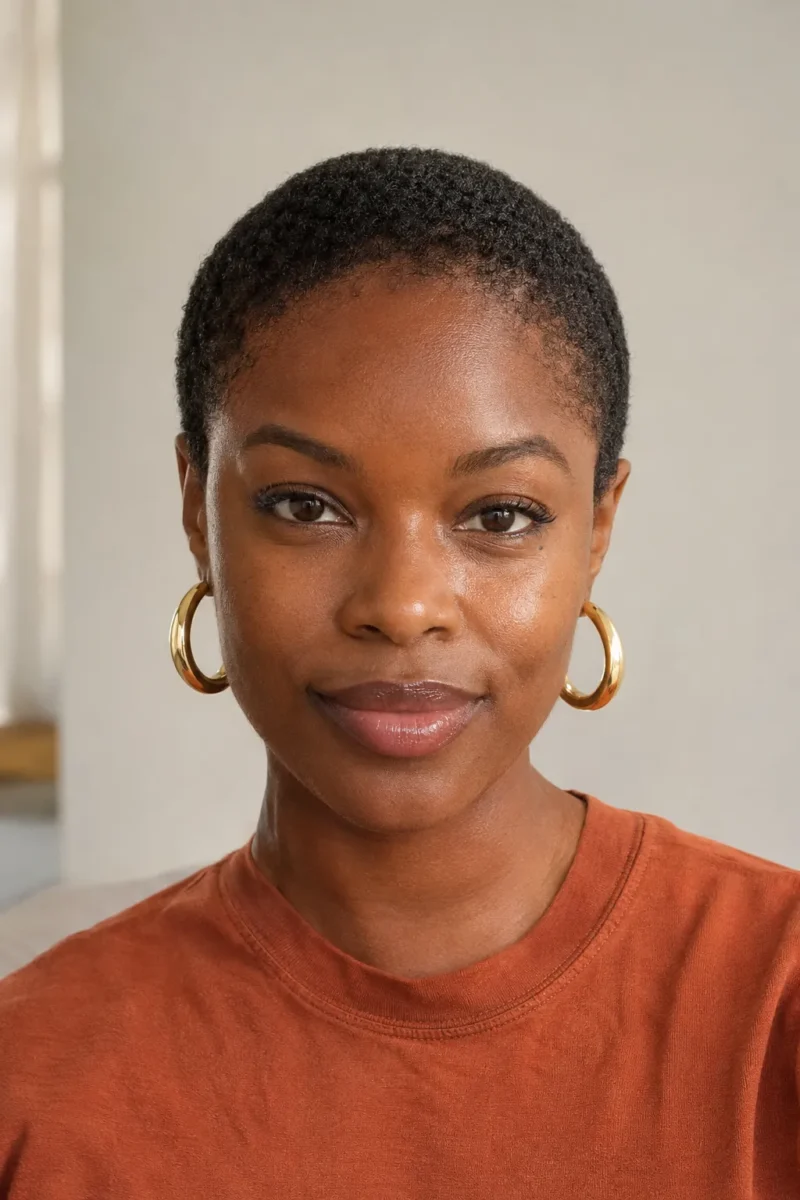
The first morning after a buzz cut, getting ready takes about as long as brushing your teeth.
The hair gets clipped short all over, sometimes left a touch longer on top. It’s bold, and it puts your face and features front and center.
Coily hair looks especially good this short, since the natural texture still shows. Straight hair works too, and so does hair that’s recovering from damage and needs a fresh start.
The catch is the shape. It blurs within two to three weeks, so cleanups come often.
A few other things change too. Your scalp is now exposed to the sun, so a hat or scalp sunscreen helps on bright days. A light oil or moisturizer keeps the skin up there from feeling tight.
What to tell your barber or stylist
17. Short Finger Waves on a Relaxed Cut

Most short styles are about the cut. This one is about the set.
Finger waves are S-shaped ridges molded close to the head with setting lotion or gel. A stylist shapes them with fingers and a comb, then dries them under a hooded dryer.
The cut underneath is a short relaxed or pressed style. It needs a few inches on top so the waves have room to form. The result is glossy and polished, with a vintage feel. Plenty of women wear it for church, work, or weddings.
Ask for: a short relaxed cut with enough length on top to wave, set in finger waves with setting lotion.
A satin wrap at night helps the set last for days. If you touch up with a curling or flat iron, apply heat protectant first. Plan on trims and relaxer touch-ups on your stylist’s schedule.
Short relaxed hair worn straight. It lies flat against the head, with no real shape and a few flyaways at the crown.
Shiny S-shaped waves along the top and sides, a sleek nape, and a set that holds for days under a satin wrap.
Conclusion
A short cut feels like less of a gamble once you know what to ask for. Every look here comes down to three things. How your texture behaves, how much time you want to spend each morning, and how often you’re willing to sit in the salon chair.
Be honest about those three, and picking from these short hairstyles for women gets a lot easier. A sleek bob, a soft pixie, or a tapered crop can all feel like you when the cut fits your hair and your life.
Save this list for the next time you’re itching for a change, and bring your favorite photos to your next appointment.
Before your appointment